
Commercial Real Estate / Perspective
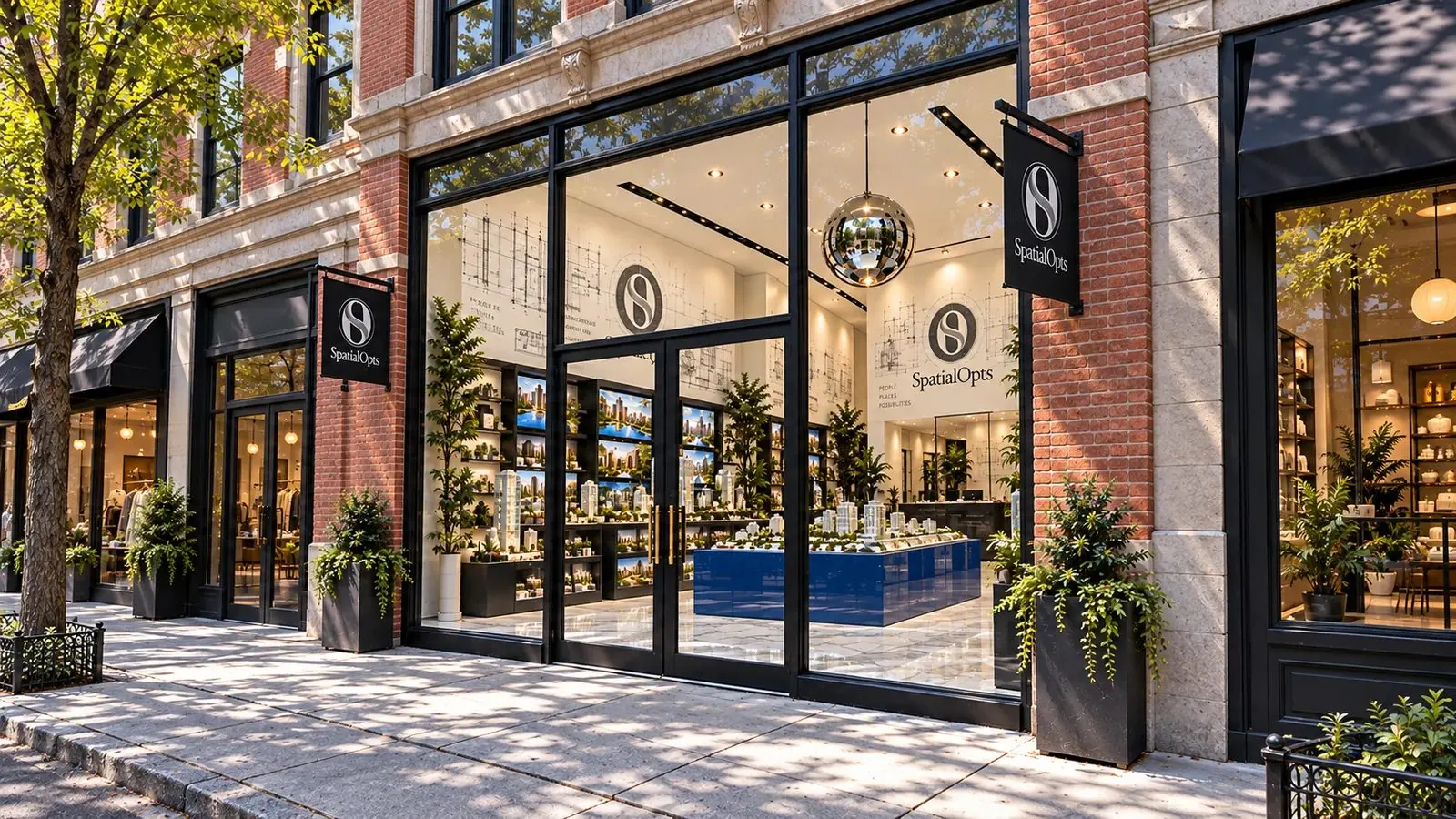
AI is fast. Custom 3D is exact. Commercial real estate rarely needs only one of them. The best CRE visuals live in the space between: precise where the decision depends on it, fast everywhere else.
The Space Between 3D + AI for CRE Visuals
-
01 / The problem
Two tools, two failure modes
AI rendering produces a convincing image in minutes, but it can drift: proportions shift, details are invented, signage text comes out garbled, and the next view does not match the last. It can also burn time and tokens chasing a result it cannot hold.
Custom 3D rendering is exact and consistent across every view, but a full model takes time and budget that a leasing update or a quick tenant pitch rarely justifies.
Commercial real estate sits on both sides: decisions that need precision, and a market that will not wait.
-
02 / The space between
Lock what matters, accelerate the rest
We decide, view by view, what has to be exact and what can move fast.
- 3D base, AI finish: a model locks the geometry and camera, then AI workflows add materials, landscape, people, lighting and seasons.
- AI concept, 3D build: AI tests the idea with owners and tenants first, and the chosen direction is rebuilt in 3D once the design is final.
- Targeted AI edits: staging, signage and brand placement on existing views, without a new model or a new shoot.
-
03 / By asset type
Where each route fits in CRE
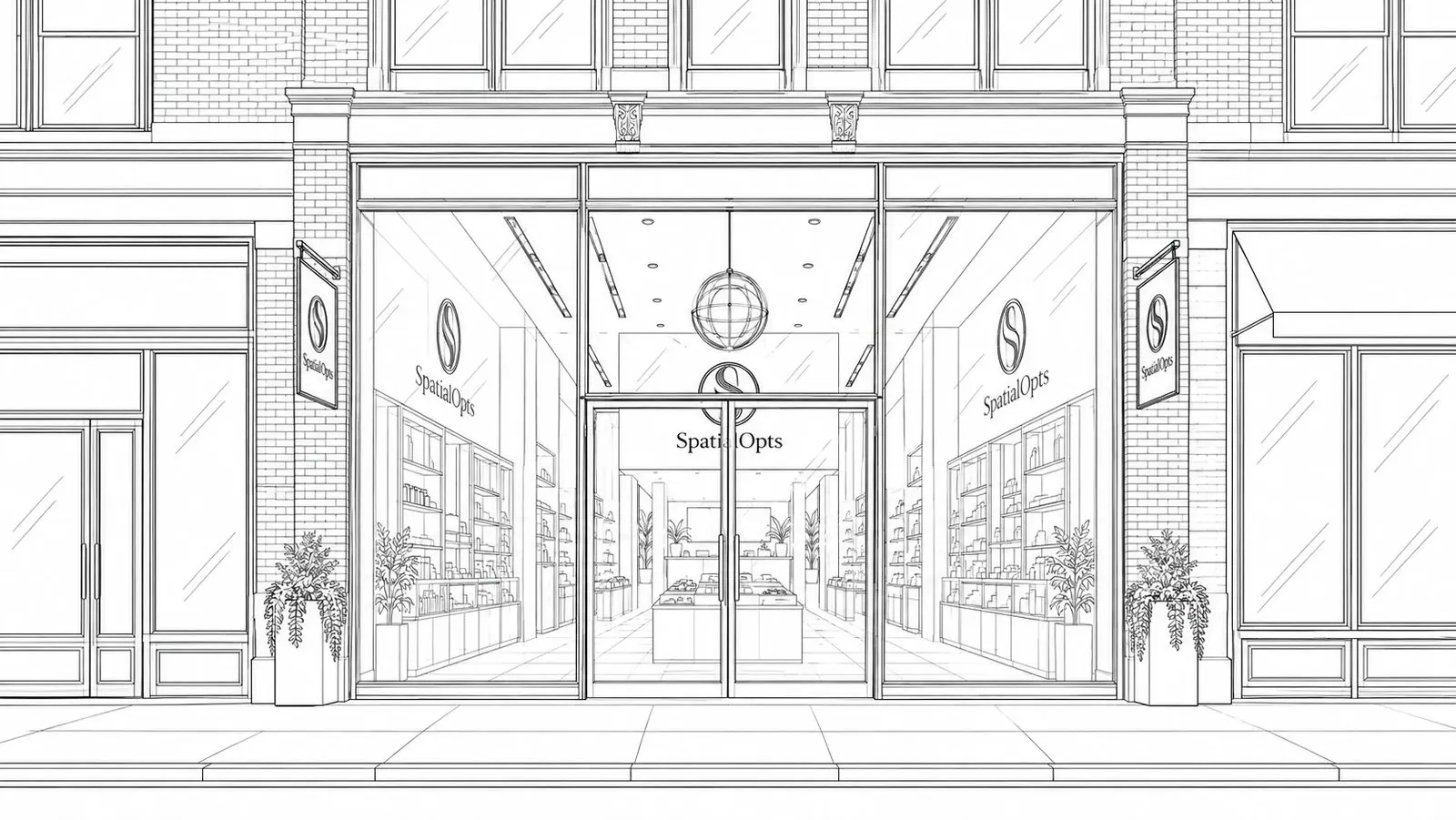
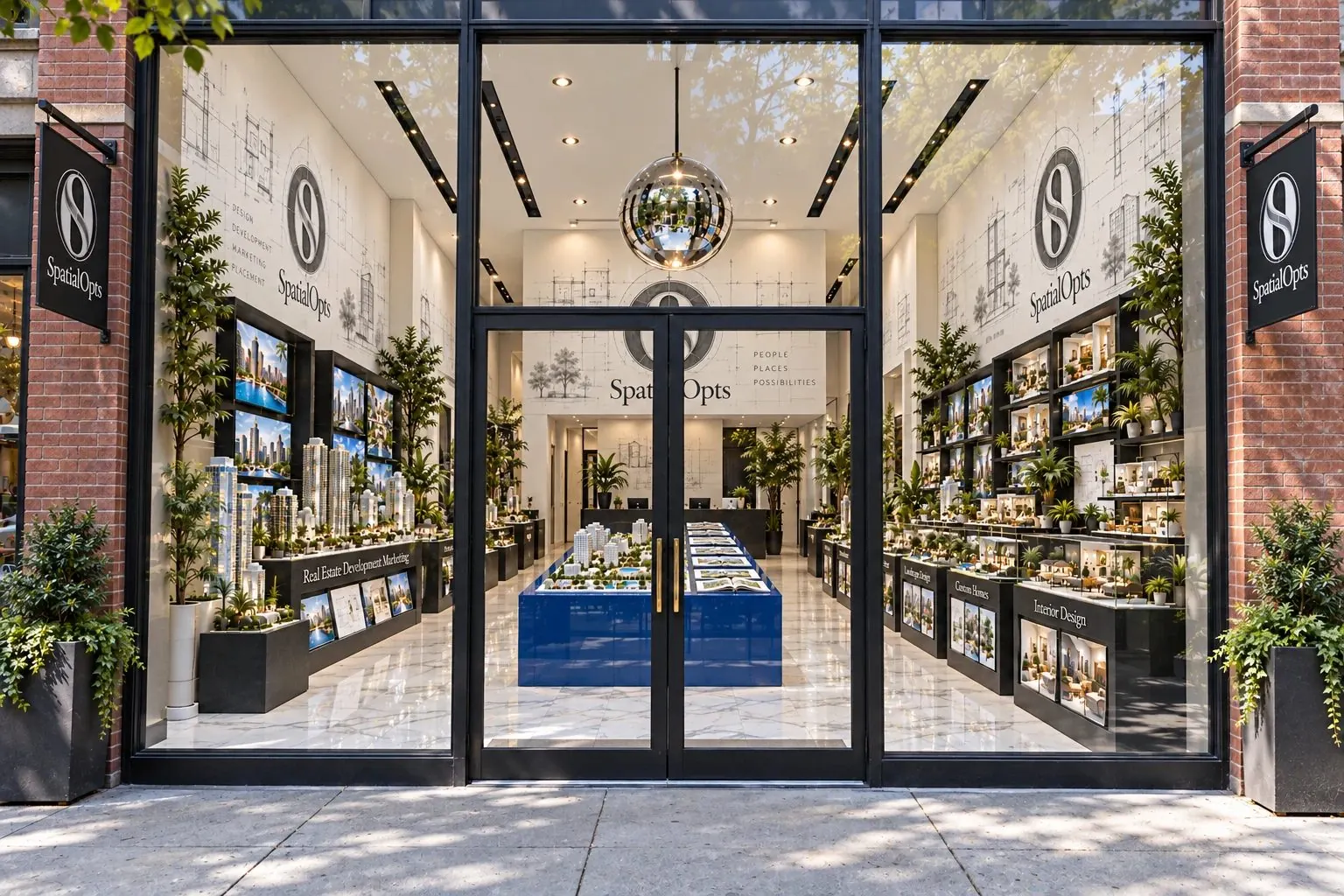
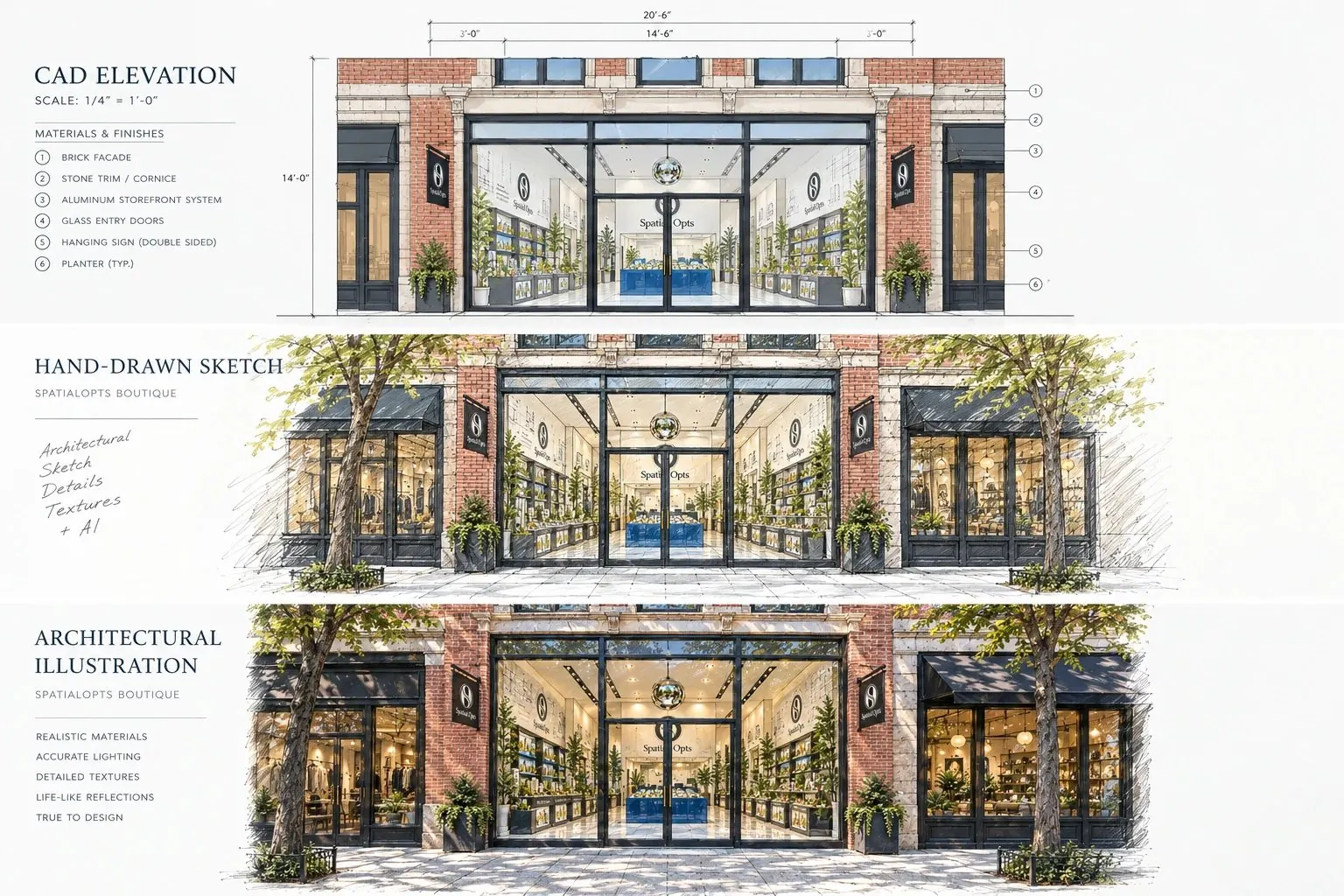
- Retail and storefronts: 3D or measured elevations for the frontage, AI for merchandising, signage studies and street life.
- Office and lobbies: AI staging and brand placement for spec suites and amenity spaces, 3D for repositioning and flagship lobbies.
- Mixed-use: 3D for massing and approvals, AI for ground-floor activation and lifestyle views.
- Hospitality: AI for mood, seasons and time of day, 3D for the hero views guests will compare to reality.
- Industrial and flex: clean 3D for site and loading, AI for context and quick tenant fit-out options.
-
04 / By stage
From acquisition to lease-up
- Acquisition and repositioning: fast AI options to test a value-add story before committing capital.
- Approvals: accurate, contextual 3D views for boards and community meetings.
- Leasing and marketing: a consistent set of heroes, interiors and amenities, refreshed with AI as the campaign evolves.
- Tenant fit-out: quick visuals of a tenant's brand in the space to close the deal.
- On the market: virtual renovation, staging and before and after updates for listings that stalled.
One retail frontage taken from sketch to photoreal storefront, and one leasing lobby branded with a single targeted edit.
In practice
The workflow, shown.


What owners, developers and brokers ask before choosing between AI and 3D.
FAQ
AI or 3D?
Is AI rendering good enough for commercial real estate marketing?
For concepts, staging, seasonal changes, signage studies and quick listing refreshes, often yes. For hero images, approvals and anything a tenant or buyer will inspect closely, AI output needs a precise base or a custom 3D model behind it, because AI can drift on geometry, proportions and text.
When is custom 3D worth the cost for a commercial property?
When accuracy carries the decision: entitlement and board presentations, flagship leasing campaigns, interactive tools, and any view that will be reused across many formats. The model is built once and every later view or format costs less.
Can you combine AI and 3D on the same project?
Yes, and that is where most of the value is. A 3D base locks the geometry, and AI workflows add materials, landscape, people, staging and brand placement quickly. Or an AI concept tests the idea first and is rebuilt in 3D once the design is final.
What do you need to start a commercial rendering?
Whatever you have: a 3D model, CAD elevations, floor plans, site photos or a sketch. We tell you which route fits the inputs and the deadline before any work starts. More in our guide to architectural visualization.